From Enablement to Execution, Egypt’s AI Ecosystem Reaches Production Scale
Today, Egypt’s AI builders gathered in the Grand Egyptian Museum for a reception that highlighted the nation’s rapidly growing AI ecosystem — spanning AI natives, developers, researchers, startups and enterprises — building applications across industries. The event included a keynote from Paolo Guglielmini, vice president of EMEA at NVIDIA. Ahmed Mostafa, regional AI adoption lead […]
Overview
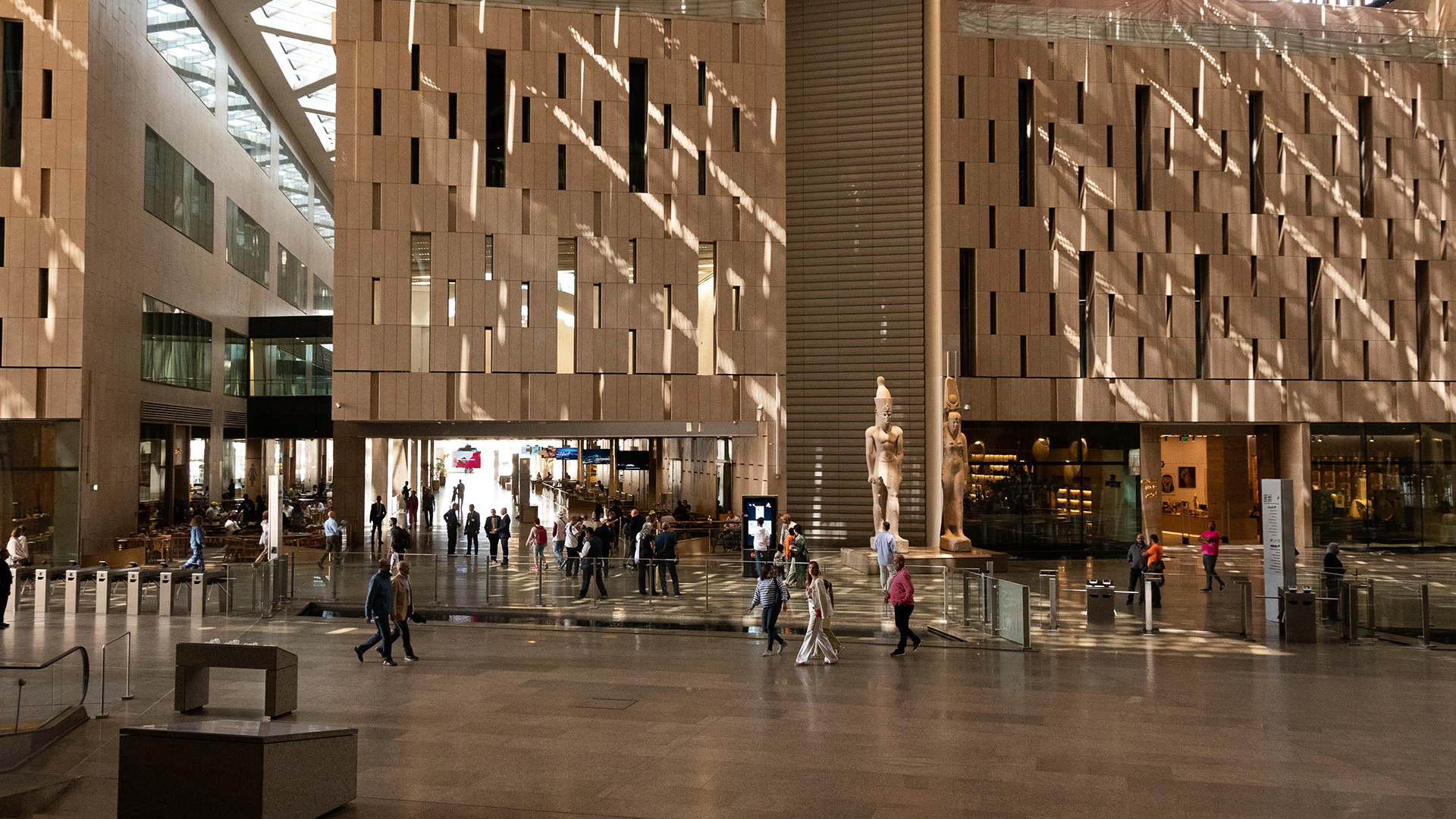
Today, Egypt’s AI builders gathered in the Grand Egyptian Museum for a reception that highlighted the nation’s rapidly growing AI ecosystem — spanning AI natives, developers, researchers, startups and enterprises — building applications across industries.
The event included a keynote from Paolo Guglielmini, vice president of EMEA at NVIDIA. Ahmed Mostafa, regional AI adoption lead for the Middle East and Africa at NVIDIA, delivered a session on “Why Accelerating Every Layer Matters,” exploring NVIDIA’s full-stack approach to AI development and deployment.
The event also featured a panel moderated by Basil Fateen, head of startups for the Middle East and Africa at NVIDIA, with participation from startups across smart spaces, healthcare, cybersecurity and robotics.
In Egypt, the NVIDIA Deep Learning Institute learner base grew more than tenfold in a single year. In June, the National Telecommunications Regulatory Authority of Egypt licensed Hassan Allam Data Centers to build and operate data centers in the country. Under that license, Hassan Allam Utilities and investment firm A15 agreed to develop a new data center, an estimated $400 million investment.
In addition, NVIDIA and A15 in July hosted an event connecting Egypt’s leading founders with NVIDIA’s global ecosystem. This has been complemented by recent startup and investor events in Egypt, including engagements with A15 and Plug and Play at the Creativa Innovation Hub at Sultan Hussein Kamel Palace, an affiliate of the Ministry of Communications and Information Technology.
Spanning a range of industries, members of the NVIDIA Inception program in Egypt include:
- Aidera: A unified enterprise intelligence system that connects data, systems, workflows and operational touch points turning enterprise-wide signals into informed decisions, intelligent automation, coordinated execution and measurable impact.
- Intella: Developing Arabic speech intelligence for applications across financial services, telecommunications and more.
- Marses Robotics: Developing autonomous robotics and industrial automation technologies.
- Proteinea: Combining AI protein design with lab experiments to develop differentiated medicines.
- Stakpak: Developing an open source autonomous developer-operations AI agent.
- Paymob and Thndr: Building better financial services through technology and AI.
The NVIDIA VC Alliance has also expanded its presence in Egypt, with A15 and M Empire joining the program, connecting more local investors with NVIDIA’s global startup ecosystem. This momentum has been complemented by startup and investor events, including collaborations with RiseUp and Plug and Play, as well as Flat6Labs, a regional entrepreneurship platform supporting startups and innovation across emerging markets, and Algebra Ventures, a Cairo-based venture capital firm backing technology startups.
AI Growth Across Africa
The Egypt ecosystem event showed just a piece of Africa’s larger, growing AI ecosystem.
For most of the past decade, conversations about Africa’s AI ecosystem revolved around “potential.” They centered on what the technology might do for the continent, rather than what the continent could build with it.
Africa is home to roughly 18% of the world’s population but less than 1% of the world’s data center capacity. This means African developers have often relied on cloud-based compute hosted outside the continent for large-scale AI training.
This is rapidly changing. Within a year, four AI factories have been announced or brought online across Africa, with another 656 megawatts of new capacity in the pipeline. These AI factories will provide African developers and enterprises with the accelerated computing infrastructure needed to train, fine-tune and deploy AI models closer to where data is created.
Cassava Technologies, Africa’s first NVIDIA Cloud Partner, is expanding access to NVIDIA accelerated computing through its AI factory in South Africa and planned deployments across Egypt, Kenya, Nigeria and Morocco — an investment that could reach $720 million. In Egypt, Cassava and Vodafone Egypt recently announced an AI factory initiative to provide businesses and government organizations with locally hosted AI infrastructure through GPU-as-a-service, supporting the development and deployment of AI applications while keeping data in-country.
Details
Building on Cassava’s first AI factory in South Africa, the rollout aims to expand access to local accelerated computing, helping developers, enterprises and researchers train, customize and deploy AI models closer to where their data is created.
Similarly, Stratos Lab, a South African AI neocloud provider, is partnering with ECOBLOX and Digital Parks Africa to launch an AI cloud powered by more than 50 NVIDIA HGX B300 systems — delivering over 7 exaflops of performance. The deployment gives African enterprises and developers access to high-performance GPU compute locally, enabling model training, inference and agentic AI workloads with lower latency and at reduced costs.
And at GITEX Africa in Marrakech in April, Nexus Core Systems announced a collaboration with Morocco’s Ministry of Digital Transition, its Ministry of Investment and the investment agency AMDIE to build the Nexus AI factory outside Casablanca: a $1.2 billion initial investment with 500 megawatts planned, NVIDIA Blackwell accelerated computing and renewable power from TAQA Morocco.
The Demand Was Already There
Infrastructure of this kind is not based on mere potential — it’s based on confidence that local developers and enterprises are ready to put the infrastructure to productive use.
In 2024, NVIDIA set a target of training 100,000 developers across Africa through the NVIDIA Deep Learning Institute within three years. To date, NVIDIA’s trained over 85,000 developers in Africa, and the continent is among NVIDIA’s fastest-growing developer regions — Nigeria is now the institute’s second-largest market globally.
InstaDeep joined NVIDIA Inception in 2017 as a small team in Tunis using its first NVIDIA DGX system. Since then, it’s developed drug discovery, protein design and logistics optimization applications, and was acquired by BioNTech for about $680 million.
Africa accounts for roughly a third of the world’s languages, often invisible to frontier models. To help advance African language models, language model lab Lelapa AI built InkubaLM and the Vulavula speech service for South African languages including isiZulu and Sesotho.
MeetKai, for example, an NVIDIA Inception member, is expanding its work in Egypt with Smart Africa, building its AI stack on NVIDIA technology as part of its plans for the market. The company is among a growing group of AI innovators using NVIDIA technology to build and scale across Africa.
And there’s still much room to grow. McKinsey puts African data center demand at roughly 0.4 gigawatts today, and estimates it will rise to between 1.5 and 2.2 gigawatts by 2030, which requires between $10 to $20 billion in construction.
Learn more about the NVIDIA Developer Program, NVIDIA Inception and NVIDIA Deep Learning Institute.
Source
Originally published at blogs.nvidia.com.