Briefing
The fast feed: breaking AI news from the global tech press, deduplicated and time-ordered.
The fast feed: breaking AI news from the global tech press, deduplicated and time-ordered.
Latest in Briefing
30 storiesExpresso-AI: Explainable Video-Based Deep Learning Models for Depression Diagnosis
Given the widespread prevalence of depression and its consequential impact on individuals and society, it is crucial to obtain objective measures for early diag…
BitNet Text Embeddings
LLM-based text embedders have substantially improved retrieval and semantic representation quality, but their deployment remains costly: large backbone models s…
UniTeD: Unified Temporal Diffusion for Joint Perception and Planning in Autonomous Driving
Diffusion models have shown strong potential for multi-modal planning in end-to-end autonomous driving. However, most existing methods confine diffusion to the …
Gaussian Mean Field Variational Inference can Overestimate Predictive Variance
Mean Field Variational Inference (MFVI) is widely understood to underestimate posterior variance. By analysing conjugate Bayesian Linear Regression (BLR), we sh…
OPERA: Aligning Open-Ended Reasoning via Objective Perplexity-based Reinforcement Learning
Reinforcement Learning (RL) has enabled LLMs to excel in objective reasoning tasks such as mathematics and code generation. However, applying RL to open-ended t…
MiniOpt: Reasoning to Model and Solve General Optimization Problems with Limited Resources
Achieving strong optimization generalization across diverse optimization problems while requiring limited training resources remains a challenging problem for o…
AI Snitches Get Glitches: Towards Evading Agentic Surveillance
To better assist users with completing challenging tasks, AI agents mediate communications, access data, and interact with different APIs. Many employers (and e…
Semantic Consistency Policy Optimization for Reinforcement Learning of LLM Agents
Group-based reinforcement learning effectively post-trains LLM agents for long-horizon, sparse-reward tasks by deriving step-level credit from trajectory outcom…
Enhancing Brain MRI Anomaly Detection and Reasoning with ROI Rethink and Synthetic Data
Medical vision-language models typically generate diagnoses through single-pass inference without indicating which image regions support their conclusions. This…
Variational Autoencoder Layer
Variational Autoencoders (VAEs) belong to a family of autoencoders with probabilistic properties, making them well suited for generating data by producing a smo…
Explainable Control Framework (XCF) based on Fuzzy Model-Agnostic Explanation and LLM Agent-Supported Interface
Increasing demand for precise and reliable control in complex scenarios has led to the development of increasingly sophisticated controllers, including data-dri…
Helpful or Harmful? Evaluating LLM-Assisted Vulnerability Patching via a Human Study
Software vulnerability remediation is a cognitively demanding task that requires specialized security expertise often lacking in general developers. In the mean…
Tensorion: A Tensor-Aware Generalization of the Muon Optimizer
Common first-order optimizers, such as Adam, implicitly treat each parameter block as an unstructured vector, which disregards the multilinear weight structure …
Multi-Agent Goal Recognition with Team- and Goal-Conditioned Reinforcement Learning and Factorized Branch-and-Bound
Multi-agent goal recognition asks an observer to jointly infer which agents act together and what each team is trying to achieve, so the hypothesis space grows …
The Tatoxa System for Text Detoxification in Low-Resource Languages: The Case of Tatar
Text detoxification, the automated detection and mitigation of abusive and harmful content, is essential for ensuring the safety of online communities and prote…
Can Trustless Agents Be Trusted? An Empirical Study of the ERC-8004 Decentralized AI Agent Ecosystem
As autonomous AI agents increasingly transact across organizational boundaries, a fundamental trust challenge emerges: how can an agent assess whether an unknow…
How Robust is OCR-Reasoning? Evaluating OCR-Reasoning Robustness of Vision-Language Models under Visual Perturbations
Vision-language models (VLMs) have achieved strong performance on OCR-based benchmarks and increasingly focused on text-rich understanding, but their robustness…
Natural Ungrokking: Asymmetric Control of Which Rules Survive Pretraining
Midway through an ordinary pretraining run, a small language model learns the pronoun-gender rule: cued with a girl's name ("Sue cried because"), it resolves th…
When Does Synthetic Data Augmentation Improve Score-Based Imbalanced Classification?
Synthetic data augmentation is widely used to mitigate class imbalance, but its theoretical effects on score-based classification remain poorly understood. This…
Same Evidence, Different Answer: Auditing Order Sensitivity in Multimodal Large Language Models
Standard benchmarks for multimodal large language models (MLLMs) score each item on one canonical ordering and miss whether order-irrelevant shuffling changes t…
MVTrack4Gen: Multi-View Point Tracking as Geometric Supervision for 4D Video Generation
Synthesizing a novel-view video from a monocular reference video along a target camera trajectory requires both geometric consistency and motion fidelity with r…
RevengeBench: Reverse Engineering Code-Space Policies from Behavioral Experiments
For most of scientific history, researchers studying behavior could only infer hidden mechanisms from outward actions: an inverse problem that becomes more trac…

OpenAI says ChatGPT Instant now better understands what users actually want
OpenAI is updating GPT-5.5 Instant, its most-used ChatGPT model. The update targets conversation quality, with better intent recognition, improved context acros…
Claude Code v2.1.191
'%2F%3E%3Cg%20opacity%3D'0.16'%20stroke%3D'%23fff'%20stroke-width%3D'6'%20stroke-linecap%3D'round'%3E%3Cline%20x1%3D'292'%20y1%3D'42'%20x2%3D'370'%20y2%3D'42'%2F%3E%3Cline%20x1%3D'292'%20y1%3D'66'%20x2%3D'352'%20y2%3D'66'%2F%3E%3Cline%20x1%3D'292'%20y1%3D'90'%20x2%3D'372'%20y2%3D'90'%2F%3E%3C%2Fg%3E%3Cg%20fill%3D'%23fff'%20font-family%3D'-apple-system%2CBlinkMacSystemFont%2CSegoe%20UI%2CRoboto%2Csans-serif'%3E%3Ctext%20x%3D'30'%20y%3D'250'%20font-size%3D'30'%20font-weight%3D'700'%3EAI%20PRACTICE%3C%2Ftext%3E%3Ctext%20x%3D'31'%20y%3D'280'%20font-size%3D'15'%20opacity%3D'0.82'%20font-weight%3D'500'%3Emckinsey.com%3C%2Ftext%3E%3C%2Fg%3E%3C%2Fsvg%3E)
How KPN is building an agentic AI engine for customer care
By transforming its contact center with agentic AI, the leading Dutch telecom company is strengthening quality, improving efficiency, and building AI capabiliti…
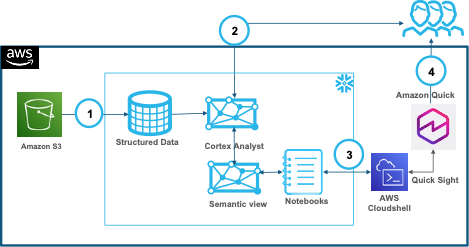
AI-powered BI with Snowflake and Amazon Quick
In this post, you will learn how to build an end-to-end integration between Snowflake semantic views and Amazon Quick. The sample data is user review data for a…
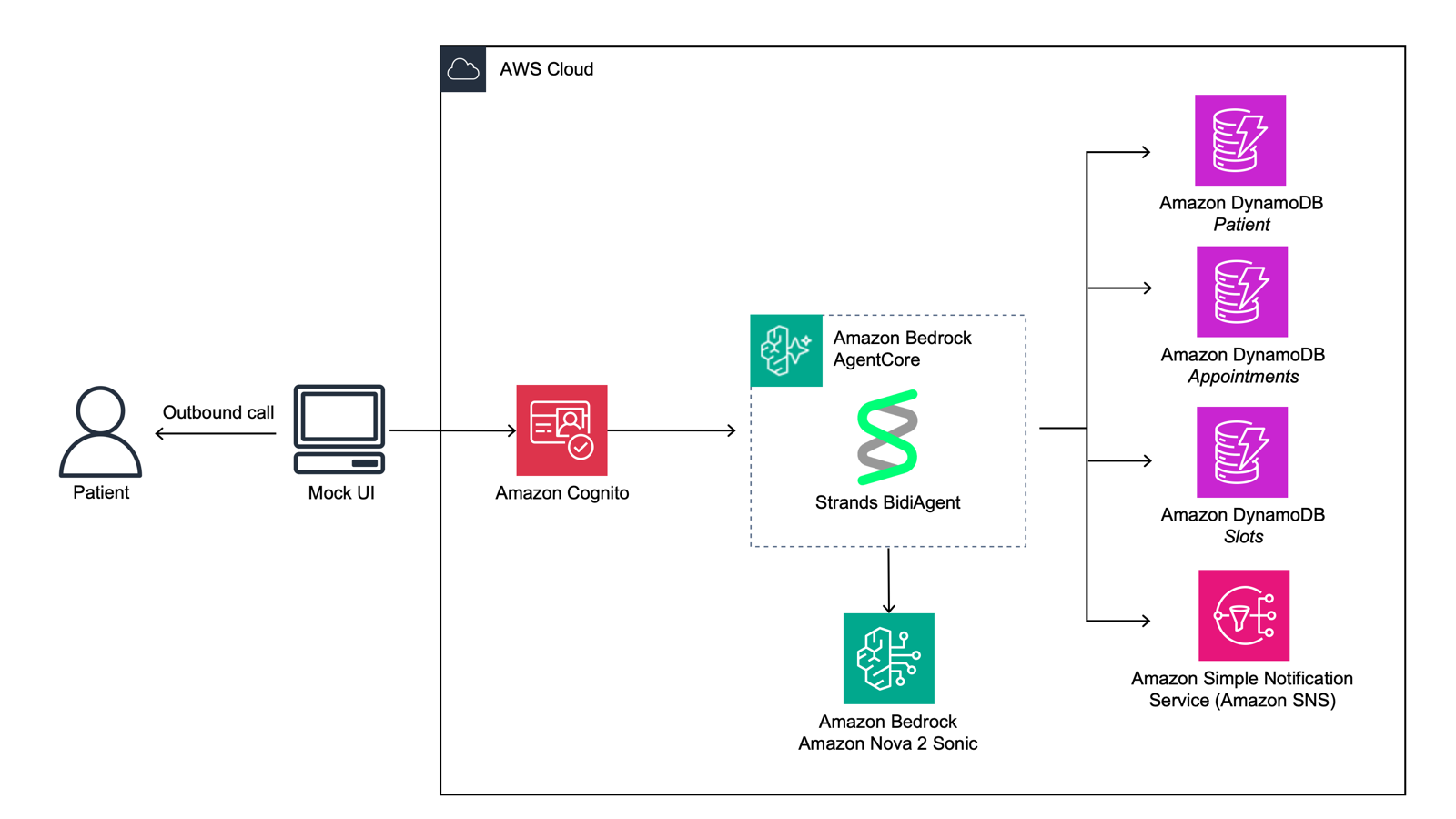
Build a healthcare appointment agent with Amazon Nova 2 Sonic
In this post, you will learn how to build a voice agent that handles appointment reminder conversations using Amazon Nova 2 Sonic and Amazon Bedrock AgentCore. …
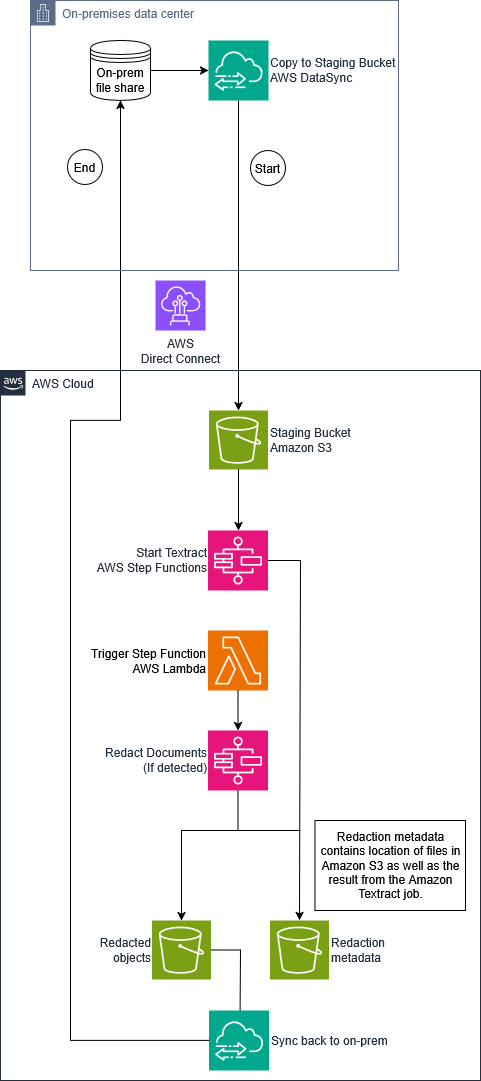
Huntington Bank: Redacting sensitive data from 400M+ documents with AWS
In this post, we walk through how Huntington built a scalable AWS solution to detect and redact Personally Identifiable Information (PII) and Payment Card Indus…

Figma bets on human judgment at Config 2026 while the AI powering its canvas belongs to someone else
At Config 2026, Figma turned its canvas into a full workspace with code, animation, shaders, and AI agents. But the intelligence powering all of it is rented fr…

Snowflake CEO finds GLM-5.2 competitive with Opus 4.7 at a fraction of the cost
Zhipu AI's GLM-5.2 nearly matches Claude Opus 4.7 in a Snowflake benchmark with 103 coding tasks at one-fifth the cost per output token. But the Chinese model b…