Agents
The agentic stack, tracked daily: MCP and A2A protocols, LangChain/LangGraph, Claude Code, OpenAI Agents SDK, agent frameworks, benchmarks and orchestration patterns.
The agentic stack, tracked daily: MCP and A2A protocols, LangChain/LangGraph, Claude Code, OpenAI Agents SDK, agent frameworks, benchmarks and orchestration patterns.
Latest in Agents
30 stories
Google bakes computer control directly into Gemini 3.5 Flash, letting the model see and operate your screen
Google has integrated "Computer Use" directly into Gemini 3.5 Flash, letting the model operate computers, browsers, and mobile devices on its own. On the OSWorl…
'%2F%3E%3Cg%20opacity%3D'0.16'%20stroke%3D'%23fff'%20stroke-width%3D'6'%20stroke-linecap%3D'round'%3E%3Cline%20x1%3D'292'%20y1%3D'42'%20x2%3D'370'%20y2%3D'42'%2F%3E%3Cline%20x1%3D'292'%20y1%3D'66'%20x2%3D'352'%20y2%3D'66'%2F%3E%3Cline%20x1%3D'292'%20y1%3D'90'%20x2%3D'372'%20y2%3D'90'%2F%3E%3C%2Fg%3E%3Cg%20fill%3D'%23fff'%20font-family%3D'-apple-system%2CBlinkMacSystemFont%2CSegoe%20UI%2CRoboto%2Csans-serif'%3E%3Ctext%20x%3D'30'%20y%3D'250'%20font-size%3D'30'%20font-weight%3D'700'%3EAI%20LABS%3C%2Ftext%3E%3Ctext%20x%3D'31'%20y%3D'280'%20font-size%3D'15'%20opacity%3D'0.82'%20font-weight%3D'500'%3Eopenai.com%3C%2Ftext%3E%3C%2Fg%3E%3C%2Fsvg%3E)
How agents are transforming work
A new OpenAI research paper shows how AI agents are transforming work, enabling longer, more complex tasks and expanding productivity across roles.…
Stagnant Neuron: Towards Understanding the Plasticity Loss in Multi-Agent Reinforcement Learning Value Factorization Methods
Multi-Agent Reinforcement Learning (MARL) value factorization methods can suffer from a loss of plasticity, gradually failing to adapt when transferring to new …
Lifelong In-Context Learning with Transformers Requires Parametric Forms of Attention
Lifelong continual learning remains an obstacle on the path to human-like intelligence. Modern transformers show sparks of intelligence with in-context learning…
Beyond Next-Observation Prediction: Agent-Authored World Modeling for Sequential Decision Making
Recent studies on world modeling for Large Language Model (LLM) agents typically formulate the learning objective as next-observation prediction. However, this …
VPA-Guard: Defending and Benchmarking Image-to-Video Generation Against Visual Prompt Attacks
Recent advancements in Image-to-Video (I2V) generation have transformed input images from simple appearance references into interactive control interfaces where…
Constraint Tax in Open-Weight LLMs: An Empirical Study of Tool Calling Suppression Under Structured Output Constraints
Tool Calling and Structured Output are two core capabilities of modern Agent systems, yet their interaction under joint deployment conditions remains insufficie…
UniTeD: Unified Temporal Diffusion for Joint Perception and Planning in Autonomous Driving
Diffusion models have shown strong potential for multi-modal planning in end-to-end autonomous driving. However, most existing methods confine diffusion to the …
AI Snitches Get Glitches: Towards Evading Agentic Surveillance
To better assist users with completing challenging tasks, AI agents mediate communications, access data, and interact with different APIs. Many employers (and e…
Semantic Consistency Policy Optimization for Reinforcement Learning of LLM Agents
Group-based reinforcement learning effectively post-trains LLM agents for long-horizon, sparse-reward tasks by deriving step-level credit from trajectory outcom…
Explainable Control Framework (XCF) based on Fuzzy Model-Agnostic Explanation and LLM Agent-Supported Interface
Increasing demand for precise and reliable control in complex scenarios has led to the development of increasingly sophisticated controllers, including data-dri…
Multi-Agent Goal Recognition with Team- and Goal-Conditioned Reinforcement Learning and Factorized Branch-and-Bound
Multi-agent goal recognition asks an observer to jointly infer which agents act together and what each team is trying to achieve, so the hypothesis space grows …
Can Trustless Agents Be Trusted? An Empirical Study of the ERC-8004 Decentralized AI Agent Ecosystem
As autonomous AI agents increasingly transact across organizational boundaries, a fundamental trust challenge emerges: how can an agent assess whether an unknow…
RevengeBench: Reverse Engineering Code-Space Policies from Behavioral Experiments
For most of scientific history, researchers studying behavior could only infer hidden mechanisms from outward actions: an inverse problem that becomes more trac…
'%2F%3E%3Cg%20opacity%3D'0.16'%20stroke%3D'%23fff'%20stroke-width%3D'6'%20stroke-linecap%3D'round'%3E%3Cline%20x1%3D'292'%20y1%3D'42'%20x2%3D'370'%20y2%3D'42'%2F%3E%3Cline%20x1%3D'292'%20y1%3D'66'%20x2%3D'352'%20y2%3D'66'%2F%3E%3Cline%20x1%3D'292'%20y1%3D'90'%20x2%3D'372'%20y2%3D'90'%2F%3E%3C%2Fg%3E%3Cg%20fill%3D'%23fff'%20font-family%3D'-apple-system%2CBlinkMacSystemFont%2CSegoe%20UI%2CRoboto%2Csans-serif'%3E%3Ctext%20x%3D'30'%20y%3D'250'%20font-size%3D'30'%20font-weight%3D'700'%3EAI%20PRACTICE%3C%2Ftext%3E%3Ctext%20x%3D'31'%20y%3D'280'%20font-size%3D'15'%20opacity%3D'0.82'%20font-weight%3D'500'%3Emckinsey.com%3C%2Ftext%3E%3C%2Fg%3E%3C%2Fsvg%3E)
How KPN is building an agentic AI engine for customer care
By transforming its contact center with agentic AI, the leading Dutch telecom company is strengthening quality, improving efficiency, and building AI capabiliti…
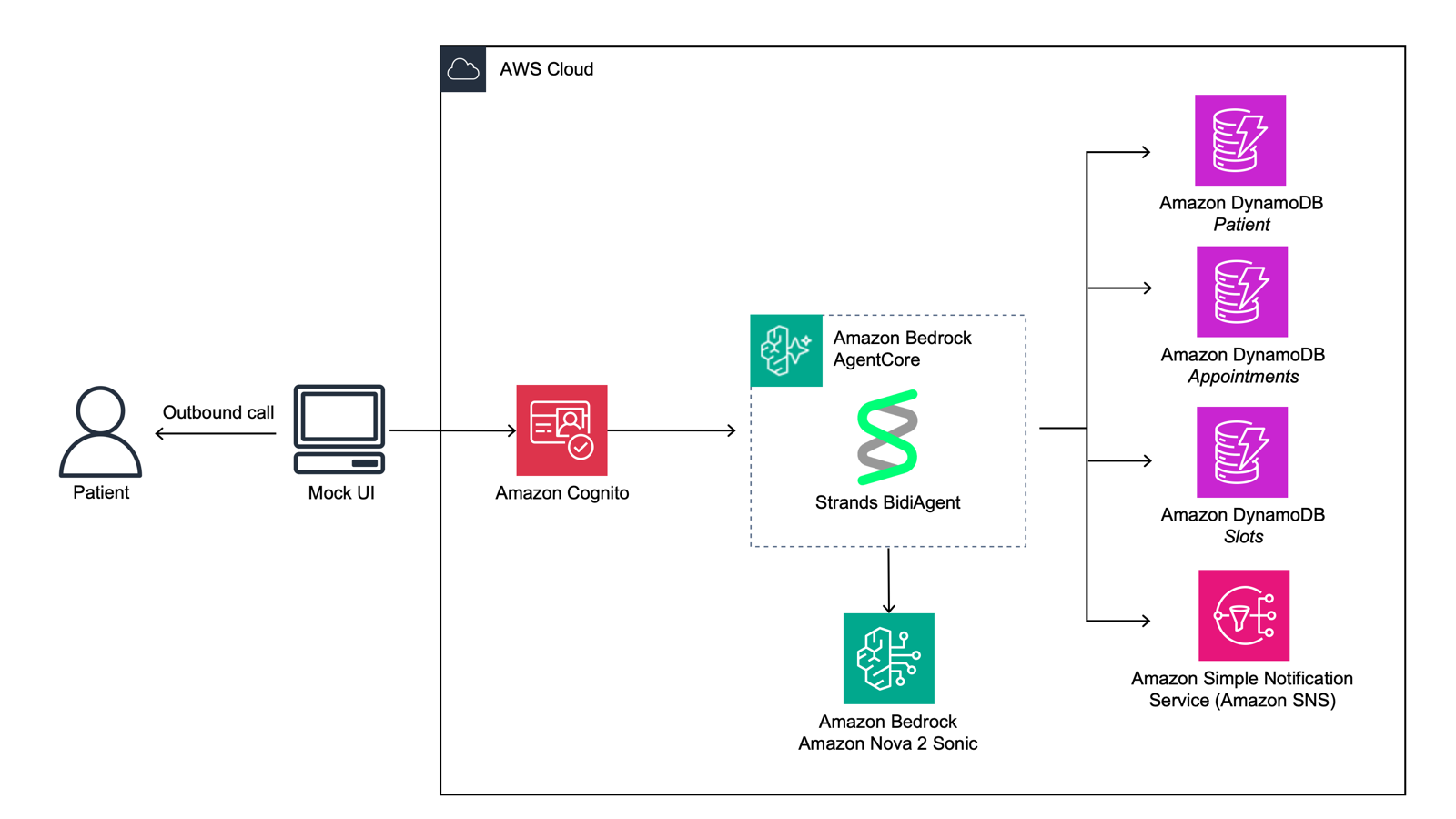
Build a healthcare appointment agent with Amazon Nova 2 Sonic
In this post, you will learn how to build a voice agent that handles appointment reminder conversations using Amazon Nova 2 Sonic and Amazon Bedrock AgentCore. …

Figma bets on human judgment at Config 2026 while the AI powering its canvas belongs to someone else
At Config 2026, Figma turned its canvas into a full workspace with code, animation, shaders, and AI agents. But the intelligence powering all of it is rented fr…
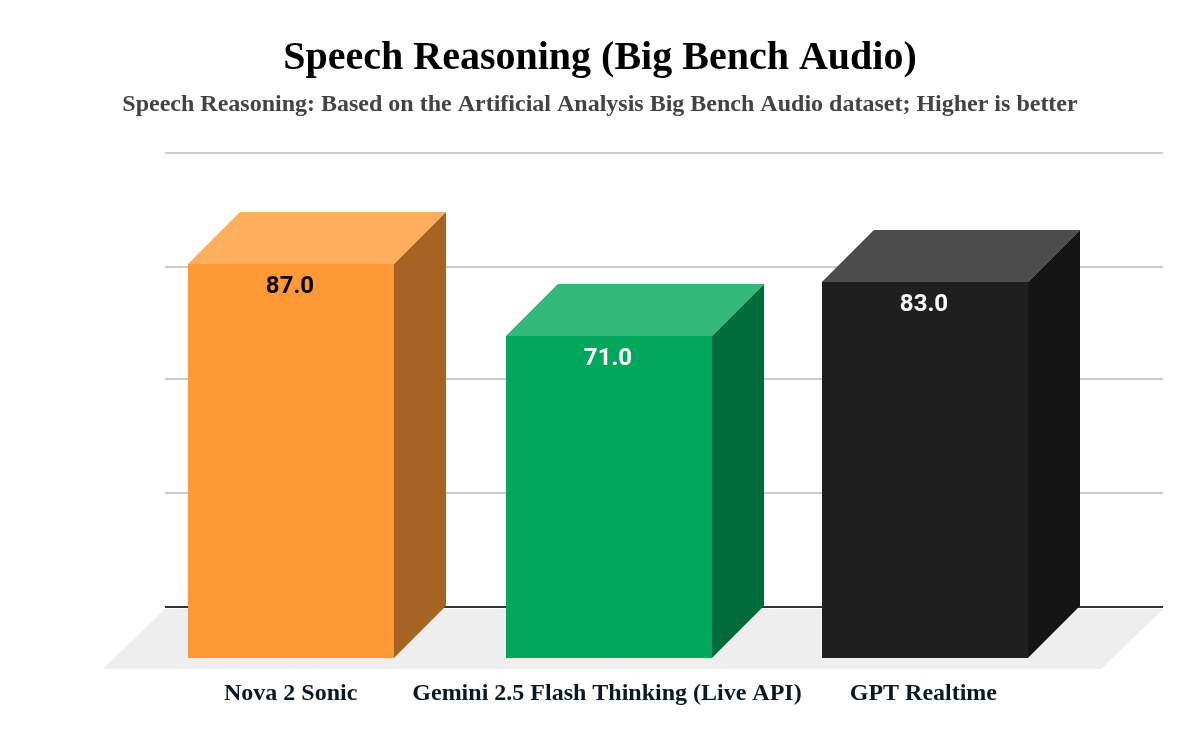
How Loka Built a Natural, Low-Latency Voice Agent with Amazon Nova 2 Sonic
In this post, we demonstrate the architecture and approach Loka used to solve a common frustration: robotic, slow voice assistants that cause customers to hang …

Figma’s design agent, now with custom tools and greater context
OmniPath: A Multi-Modal Agentic Framework for Auditing Wheelchair Accessibility
For a wheelchair user, a standard blue line on a map is often a broken promise. While platforms like OpenStreetMap (OSM) successfully capture where a path is, t…
MedBench v5: A Dynamic, Process-Oriented, and Hallucination-Aware Benchmark for Clinical Multimodal Models
Existing medical AI benchmarks lack process visibility, atomic skill evaluation, and integrated hallucination detection. We introduce MedBench v5, a redesigned …
An Introduction to Causal Reinforcement Learning
Causal inference provides a set of principles and tools that allow one to combine data and knowledge about an environment to reason with questions of counterfac…
Deep Learning Approaches for 3D Medical Scene Completion: From Geometric Modeling to Generative Paradigms
Three-dimensional scene completion has evolved as a major problem in computer vision and robotics, and its applications are diverse, including autonomous naviga…
Escaping the Self-Confirmation Trap: An Execute-Distill-Verify Paradigm for Agentic Experience Learning
Experience-driven self-evolution is critical for large language model (LLM) agents to improve through open-world interaction. However, existing experience learn…
Detecting AI Coding Agents in Open Source: A Validated Multi-Method Census of 180 Million Repositories
Generative AI coding agents are entering the open-source supply chain, yet their diverse and often invisible traces leave their prevalence poorly understood. We…
ReM-MoA: Reasoning Memory Sustains Mixture-of-Agents Scaling
Mixture-of-Agents (MoA) architectures improve inference-time scaling by organizing multiple LLM agents into layered reasoning pipelines. However, existing MoA v…
Red-Teaming the Agentic Red-Team
The use of agentic systems to perform offensive security operations has moved from a theoretical possibility to a commoditized capability. However, while the co…
AGORA: An Archive-Grounded Benchmark for Agentic Workplace Document Reasoning
Large language models are increasingly deployed as agents that reason over documents rather than answer from parametric knowledge. We study archive-grounded rea…
UniDrive: A Unified Vision-Language and Grounding Framework for Interpretable Risk Understanding in Autonomous Driving
Recent multimodal large language models (MLLMs) have shown strong potential for autonomous driving scene understanding, yet existing methods still face a fundam…
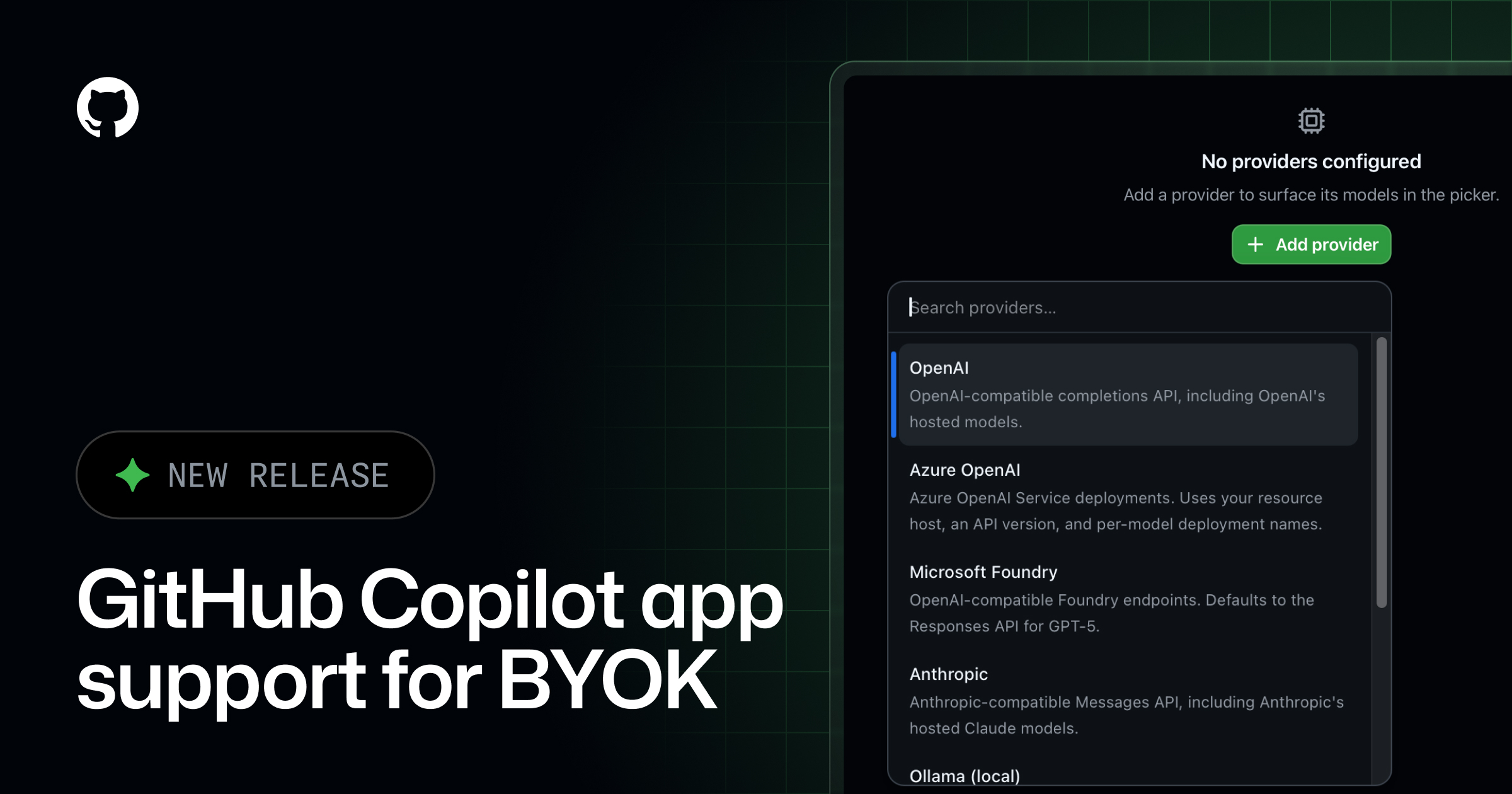
GitHub Copilot app support for BYOK
The GitHub Copilot app now supports bring your own key (BYOK), so you can run agent sessions against your own model providers, including OpenAI, Azure OpenAI, M…