ChinAI #357: AI Surveillance in Chinese Universities
Greetings from a world where…
Overview
Greetings from a world where…
one must weigh every word with care [字斟句酌]
…As always, the searchable archive of all past issues is here. Please please subscribe here to support ChinAI under a Guardian/Wikipedia-style tipping model (everyone gets the same content but those who can pay support access for all AND compensation for awesome ChinAI contributors).
Feature Translation: Under the Camera’s Gaze, I Changed from a University Lecturer into a “Performer”
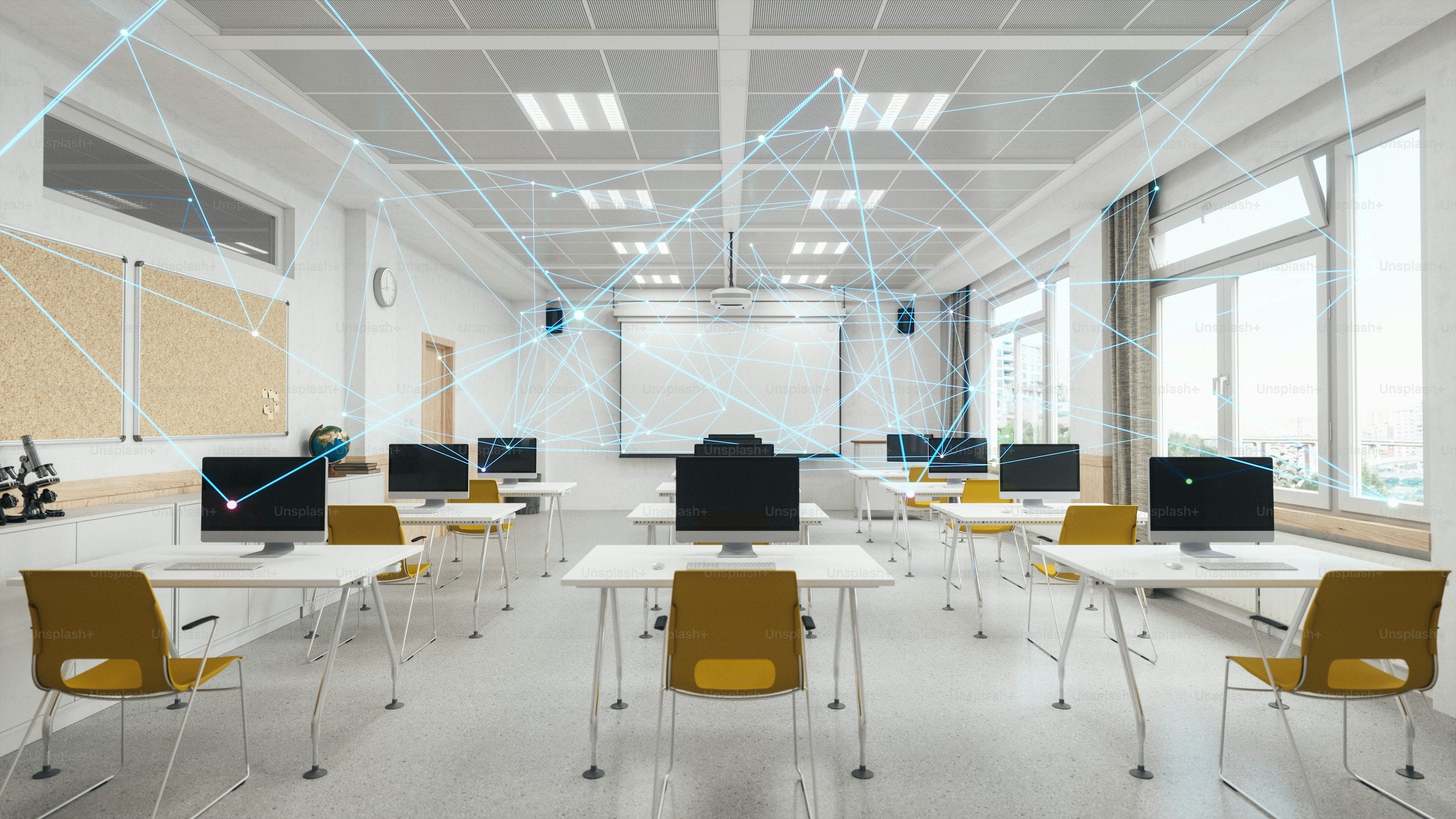
Context: Xiaoxi1 is a lecturer at a second-tier university in northeastern China (think: a school like Heilongjiang Institute of Technology). Beginning around March 2024, her school and others in the province started to introduce AI surveillance systems. Over 90% of classrooms in Xiaoxi’s school have implemented the system. In the typical set-up, one camera is positioned in the front of the classroom, while another watches from the back of the room.
The cameras record students’ head-up rates (as an indicator of attentiveness), the number of students seated in the front row, interaction patterns with the teacher, their facial expressions, as well as the teacher’s verbal tics, gestures, and whether their speech content triggers any “sensitive keywords.” In some cases, universities even mount a screen next to the classroom blackboard that displays these metrics as they update in real-time.
Details
In this week’s feature translation of a Perpetual Light Studio [极昼工作室] longform article, reported by Xiaohan Wei and Sun Ran, we hear from students and teachers like Xiaoxi about the effect of AI surveillance in Chinese university classrooms.
Key Takeaways: University professors feel alienated by AI surveillance systems, turning from “instructors” into “performers.” The system monitors whether lecture content touches upon sensitive topics, which has prevented Xiaoxi, who teaches ideological and political education classes, from speaking with ease. One student’s Japanese-language teacher was reprimanded for sitting down during class, after the system flagged this behavior.
The article quotes Xiaoxi, “I feel as though I’ve been alienated by AI. I originally aspired for a truly brilliant classroom environment; yet, suddenly finding myself under constant surveillance, I seem to have shifted toward pursuing the avoidance of errors and compliance. Under surveillance, the very essence of education has become somewhat distorted.”
Many teachers question the inflated standards demanded by the metrics collected by the surveillance system. Another junior lecturer, Xiaoxie, was called out for a low “head-up rate” among his students, in a digital media course at a second-tier university. Xiaoxie eventually left academia. From the article, “He had no desire to exercise excessive control over his students; instead, he preferred to grant them a greater degree of autonomy. As a teacher, he feels fulfilled as long as there are one or two students in the class willing to listen to him and ask him questions.”
Xiaoxi shared a similar sentiment, which doubles as my favorite passage from the article: “AI posits a perfect classroom state…every student looking up at the teacher, responding instantly to every question. No human teacher could ever achieve such a feat. Xiaoxi believes that classroom instruction is, by its very nature, an ‘exercise in teaching with sympathy.’ As she puts it: ‘Confucius had three thousand disciples, yet only seventy-two were deemed ‘worthy sages’ [贤人]; thus, our head-up rate might also not be that high.’”
Is this sustainable integration of AI, or just universities desperately trying to catch onto the trend of the times? Xiaoxi noted that the university held a large-scale assembly prior to installing the surveillance system, where the tone seemed to say, “We (the school) possess such immense financial resources that we are able to install such a sophisticated system.” Indeed, funding for equipment upgrades typically arrives quickly if the school frames the request as “AI empowerment.”
By adopting these systems, universities can boast that they are implementing government initiatives, including the Ministry of Education’s “Action Plan for AI Innovation in Higher Education Institutions (2018).” This April, the Ministry of Education also co-published an “Action Plan for ‘AI + Education’”, which encourages the use of intelligent technologies to improve classroom teaching behaviors.
From the Perpetual Light Studio article: “‘How does a university demonstrate that it is keeping pace with the tide of AI-driven intelligence? Maybe, AI surveillance is a good way,’ one teacher observed. Her university rushed to launch its AI surveillance system just before a scheduled undergraduate teaching assessment; she felt it was largely a symbolic gesture—‘intended to show that the school truly takes teaching seriously and is really cracking down.’”
Teachers and students have found ways to fight back against the system. According to the article, “The AI surveillance systems implemented in universities have also sparked discussion online, drawing considerable opposition.”
Xiaosong is a third-year student at a top university in Shanghai, where there is generally more tolerance for professors to go off-script, though he still feels anxious on their behalf whenever he hears them saying something “sensitive” in class.
The article continues, “During a recent class, one professor, who wanted to say something, pointed a finger at the surveillance camera and declared that he was taking a risk to talk about this with them. He ultimately proceeded with his remarks, even letting slip a couple profanities. The image of the professor pointing at the camera struck Xiaosong as somewhat amusing, “a feeling like dark humor.” These subtle shifts occur predominantly in humanities classes; Xiaosong muses that perhaps some professors, despite knowing they are under surveillance, nevertheless choose not to alter their course content. This counts, in a way, as a small act of resistance against the system.”
Other students do not have a strong view on classroom surveillance. Wei and Ran report, “Noting that the general classroom atmosphere in universities is often lackluster, one student speculated that the initial intent behind introducing AI assistance was likely well-meaning—even if, as he put it, ‘in practice, it often fails to be effectively implemented.’”
As always, students find ways to adapt: “Previously, everyone would scramble for seats in the back rows to make it easier to attend to their own personal matters; now, the hottest seats are the middle rows, which are the furthest away from the cameras.” The article concludes with a pithy image: “As some students noted, most people simply prop up their tablets vertically to block the front camera, while using their own backs to shield themselves from the rear camera.”
FULL TRANSLATION: Under the Camera’s Gaze, I Changed from a University Lecturer into a “Performer”
ChinAI Links (Four to Forward)
Should-read: The Tech High Ground
In the most recent issue of Foreign Affairs, former U.S. National Security Adviser Jake Sullivan argues that the U.S should reframe AI competition as a decades-long project rather than a sprint to innovation breakthroughs. The essay also references my work on diffusion and total factor productivity!
Should-read: DeepSeek: Blueprint, Not Breach (paywalled)
I wanted to learn more about TileLang, which I covered in last week’s issue about DeepSeek V4. This Hello China Tech post, published back in October 2025, was the most helpful: “Today’s column decodes DeepSeek’s latest move: a 50 per cent price cut that hides the real story in a technical footnote. The launch of TileLang, a Python-like programming language, marks phase two of building a China-controlled AI stack. Same-day support from Huawei, Cambricon, and Hygon signals coordinated standard-setting across hardware and software. But coordination isn’t conquest–Nvidia’s CUDA moat remains deep.”
Should-read: China AI Bulletin 3
Emmie Hine continues to produce a very detailed roundup of “the latest on AI development, governance, and safety in China.” This issue’s highlights: China’s Human-Like AI Interim Measures, DeepSeek and Moonshot’s latest models, and China’s blocking of Meta’s $2B Manus acquisition.
Should-read: An Independent Safety Evaluation of Kimi K2.5
A group of researchers, led by Zheng-xin Yong and Parv Mahajan from Constellation (a non-profit working on safety of transformative AI) conducted a safety assessment of Moonshot AI’s Kimi K2.5 model. Jack Clark covered this well in his ImportAI newsletter. I liked how this paper emphasized developments in the open-source safety evaluation ecosystem:
“Frameworks such as Inspect AI and Petri, and benchmarks including ControlArena and FORTRESS are publicly available and can be configured in days. Given that we can conduct diverse safety evaluations within a short timeframe (in under a month) and with a limited financial budget, we believe that the lack of safety reports is due to organizational prioritization, not technical difficulty.”
Thank you for reading and engaging.
These are Jeff Ding’s (sometimes) weekly translations of Chinese-language musings on AI and related topics. Jeff is an Assistant Professor of Political Science at George Washington University.
Check out the archive of all past issues here & please subscribe here to support ChinAI under a Guardian/Wikipedia-style tipping model (everyone gets the same content but those who can pay for a subscription will support access for all).
Any suggestions or feedback? Let me know at chinainewsletter@gmail.com or on Twitter at @jjding99
All names appearing in this article are pseudonyms.
Source
Originally published at chinai.substack.com.